Your search keywords iacs Total 36 Article

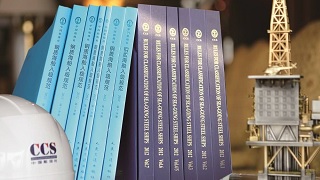
RULES FOR CLASSIFICATION OF SEA-GOING STEEL SHIPS CCS RULE CHANGE NOTICE Version 2025. RCN No.3

12/29.2025


See details >

Guidelines For Implementation Of Statutory Surveys (Ships Engaged on International Voyages)

12/26.2025


See details >

GUIDELINES FOR DESIGN AND INSTALLATION OF EXHAUST GAS CLEANING SYSTEMS 2025

09/30.2025


See details >

RULES FOR CLASSIFICATION OF SEA-GOING STEEL SHIPS 2025 AMENDMENTS

06/03.2025


See details >

RULES FOR CONSTRUCTION OF SEA-GOING SHIPS ENGAGED ON DOMESTIC VOYAGES 2025 AMENDMENTS

06/03.2025


See details >

RULES FOR MATERIALS AND WELDING 2025 AMENDMENTS

04/14.2025


See details >

RULES FOR CONSTRUCTION OF SEA-GOING SHIPS ENGAGED ON DOMESTIC VOYAGES 2024 AMENDMENTS

06/04.2024


See details >

RULES FOR CLASSIFICATION OF SEA-GOING STEEL SHIPS 2024 AMENDMENTS

06/04.2024


See details >

RULES FOR MATERIALS AND WELDING 2024 AMENDMENTS

04/17.2024


See details >

GUIDELINES FOR REMOTE SURVEY OF SHIPS 2023

06/30.2023


See details >

Rules for Materials and Welding 2023 Amendments

05/30.2023


See details >

Guidelines for Thickness Measurement of Hull(Ver.6.5)

01/01.2023


See details >

Rules For Classification of Sea-going Steel Ships 2022 RCN03

06/28.2022


See details >

RULES FOR CLASSIFICATION OF SEA-GOING STEEL SHIPS 2022 AMENDMENTS

03/29.2022


See details >

Research and Promotion of New Ship Survey Equipment

03/02.2022

To focus on research, development and application of new ship survey equipment, promote the adaptive development and promotion of new survey equipment such as UAV, robot, intelligent wearable device, online monitoring device and portable measuring device used for ship survey.

See details >

Technical Service related to Cyber Security System for Ships and Management Companies

03/02.2022

To respond to the needs of the industry in terms of improving cyber security management and in light of the requirements of maritime organizations such as IMO and IACS, regulations of flag States as well as the Guideline for Requirements and Safety Assessment of Shipboard Cyber System (2020), CCS, on the basis of comprehensive analysis of management systems, provides assistance to customers in implementation, operation, review and improvement of their management systems.

See details >

Cyber Information Security Risk/Safety Assessment for Ships and Management Companies

03/02.2022

To address the security risks brought about by increasing reliance on internet for management of ships, and the risk of ship detention for failing to manage the network properly as required by IMO and IACS, China Classification Society (CCS) analyzes cyber security status quo for shipowners and management companies and provides tailor-made cyber security risk and safety assessment.

See details >

Ship Cyber Security Laboratory

12/07.2020

The Ship Cyber Security Laboratory serves the implementation of cyber security technology in the shipbuilding industry by addressing the demand of implementing cyber security for the shipbuilding and shipping industries, solving cyber security problems in the industries, conducting basic researches on ship cyber security and application, and providing technical support and practical experience for the establishment of industry technical standards. Teams of ship cyber security technical standards research, ship cyber security risk evaluation, and ship cyber security technology accreditation have been set up, and thus has acquired the capability of monitoring, evaluation and enhancement of ship cyber security.
See details >

Guidelines for Requirement and Security Assessment of Ship Cyber System 2020

03/02.2020

See details >

RCN No.1 (December 2017) - Guidelines for Construction Monitoring of Hull Structures

12/14.2017

See details >

CSR-DSA

0

 COMPASS-STRUCTURE-CSR-DSA: Direct structural analysis (DSA) is developed in accordance with IACS Common Structural Rules for bulk carriers and oil tankers and on the basis of MSC.Patran. Due to complicated nature of CSR, traditional manual calculation approach spends great amount of time on load determination, corrosion deduction and result processing. Moreover, direct calculation is greatly increased in CSR due to the addition of more conditions and the introduction of fine mesh and very fine mesh analysis. DSA uses Patran’s PCL language and presents flexible assessment approaches, and hence greatly reduces calculation period in finite element modeling and increases analysis efficiency, to enable engineers to complete FE analysis quickly and accurately. Feature and functions: 1 Having a diversified rich marine profile database; 2 Capable of automatic loading according to the requirements of CSR, and hence avoiding the tedious manual loading process; 3 Capable of automatic boundary constraining; 4 Capable of corrosion deduction; 5 Providing powerful postprocessor approaches including buckling assessment, automatic mesh refining and fatigue calculation, etc; 6 Easy to learn and use; 7 Performing accurate and reliable calculation; 8 Updating with latest CSR.    
see details >

Scientific Research on Rules

1605237944114

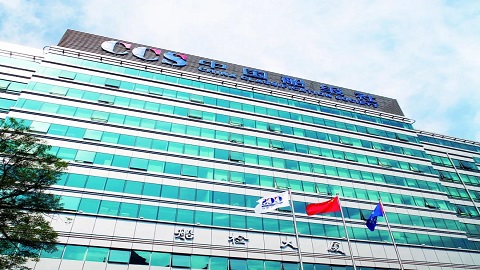
The China Classification Society (CCS) is the only professional organization engaged in the ship classification survey business in China and a full member of the International Association of Classification Societies (IACS). CCS formulates classification rules for ships and offshore installations and is entrusted by China MSA to prepare technical regulations for ships and offshore installations. CCS has scientific research information institutions such as the Rules and Technology Center (CCS Shanghai Rules & Research Institute), CCS Wuhan Rules & Research Institute, Offshore Engineering Technology Center, Technology Research and Development Center, Science and Technology Innovation Test Center, and Information Center.Since its establishment, CCS has gradually formed a system of rules and regulations for sea-going vessels (including ocean-going fishing vessels), inland vessels, offshore mobile drilling vessels, fixed platforms, and container ships through the study of international advanced technical standards and the accumulation of experience in the process of plan approval and survey. The system of rules and guidelines for ships covers high-tech ship types such as very large crude carriers (VLCC), very large container ships, very large ore carriers, membrane liquefied natural gas (LNG) carriers, and large vehicle carriers, supporting the development of the shipbuilding industry in China, and promoting the safety of water transport.CCS concentrates its efforts on the research of key technologies for large and high-tech ship types and for offshore engineering, green smart technologies, and new energy application technologies, and has issued standards such as the Rules for Green Eco-ships, Rules for Intelligent Ships, and Rules for Cruise Ships. The rules for the structure of bulk carriers and oil tankers have passed the International Goal-based Ship Construction Standards for Bulk Carriers and Oil Tankers (IMO GBS) audit without defects, and the audit results are the best among the members of the International Association of Classification Societies. Fruitful results have been achieved in the research of key technologies such as intelligent ships/unmanned ships, application of LNG power on water, very large container ships, very large ore ships, LNG carriers, mobile platforms and floating units, reaching the international leading or advanced level. A large number of very large, high-performance, high-value-added ships and offshore mobile platforms have joined CCS. The system of CCS rules and standards and the technical service capabilities are widely accepted by international and domestic industries.CCS continues to increase its influence in the international maritime community, providing strong technical support for the Chinese government to participate in international maritime affairs, safeguard national maritime rights and interests, and support the development of related industries. CCS actively participates in the formulation of international maritime technical standards and submits more than half of the Chinese proposals to the International Maritime Organization on an annual average basis. CCS has played an important role in the formulation of international maritime technical standards including the Ballast Water Management Convention, Hong Kong Convention, Common Structural Rules for Oil Tankers and Bulk Carriers, Energy Efficiency Design Index for new ships, Code on Noise Levels on Board Ships, Polar Code, IGF Code, and asbestos-free thresholds, safeguarding the interests of the country and related industries, and making great contributions to the development of international maritime technology.In the future, CCS will continue to improve its capabilities in scientific and technological innovation and leading development, to comprehensively form a scientific and technological work system with the ability for strong independent innovation, high-level rules and standards, and scientific evaluation and experiment, and fulfil the mission of “safety, environmental protection, and creating value for clients and the society”. For more details, please contact us:Sea Ship: CCS Shanghai Rules & Research Institute, Tel: 021-61089200, E-mail: ccssr@ccs.org.cnRiver Ship: CCS Wuhan Rules & Research Institute, Tel: 027-85822350, E-mail: ccswra@ccs.org.cn Offshore Engineering: Offshore Engineering Technology Center, Tel: 022-62022888, E-mail: ot@ccs.org.cn

see details >
12 36 in total