Your search keywords Total 3246 Column

MSC.569(109) - Performance standards for the reception of maritime safety information and search and rescue related information by MF and HF digital navigational data (NAVDAT) system

04/18.2025


See details >

MSC.570(109) - Performance standards for a universal shipborne automatic identification system (AIS)

04/18.2025


See details >

MSC.1-Circ.677-Rev.1 - Revised standards for the design, testing and locating of devices to prevent the passage of flame into cargo tanks in tankers

04/18.2025


See details >

MSC.1-Circ.1276-Rev.2 - Revised Unified Interpretations Of Solas Chapter Ii-2

04/18.2025


See details >

MSC.1-Circ.1460-Rev.5 - Guidance On The Validity Of Radiocommunications Equipment Installed And Used On Ships

04/18.2025


See details >

MSC.1-Circ.1628-Rev.3 - Revised Standardized Life-Saving Appliance EvaluationAnd Test Report Forms(personal life-saving appliances)

04/18.2025


See details >

MSC.1-Circ.1630-Rev.3 - Revised Standardized Life-Saving Appliance Evaluation And Test Report Forms (Survival Craft)

04/18.2025


See details >

MSC.1-Circ.1631-Rev.1 - Revised Standardized Life-Saving Appliance Evaluation And Test Report Forms (Rescue Boats)

04/18.2025


See details >

MSC.1-Circ.1632-Rev.1 - Revised Standardized Life-Saving Appliance Evaluation And Test Report Forms(launching and embarkation appliances)

04/18.2025


See details >

MSC.1-Circ.1681 - Voluntary Early Implementation of the Amendments to Chapter 16 of the IGC Code, Adopted by Resolution MSC.566(109)

04/18.2025


See details >

MSC.1-Circ.1682 - Unified Interpretations Of Solas Regulations Iii20.8.4 And 20.11, And Resolution Msc.402(96)

04/18.2025


See details >

MSC.1-Circ.1683 - Unified Interpretations Of Solas Regulation Ii-24.5.6.1, AndParagraphs 3.1.2, 3.1.4 and 3.5.3 of the IBC Code

04/18.2025


See details >

MSC.1-Circ.1684 - Unified Interpretations Of Solas Chapter Ii-2

04/18.2025


See details >

MSC.1-Circ.1685 - Unified Interpretation Of Solas Chapter Ii-1

04/18.2025


See details >

MSC.1-Circ.1687 - Interim Guidelines For The Safety Of Ships Using Ammonia As Fuel

04/18.2025


See details >

COMSAR.1-Circ.32-Rev.3 - Harmonization Of Gmdss Requirements For Radio Installations On Board Solas Ships

04/18.2025


See details >

Leadership Transition at China Classification Society

04/14.2025

2025,China Classification Society (CCS) is pleased to announce that Mr. Zhao Yan has been appointed as the new President of CCS, effective immediately.
See details >

RULES FOR MATERIALS AND WELDING 2025 AMENDMENTS

04/14.2025


See details >

China Classification Society (CCS) Released Multiple New Products and Innovative Ship Types Together with the Industry at the Singapore Maritime Exhibition

04/03.2025


See details >

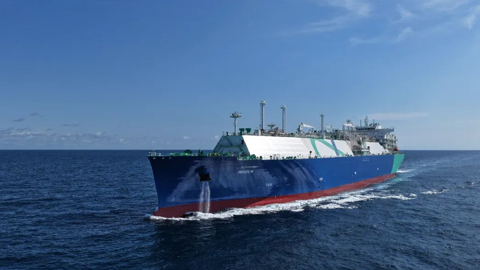
LNG Dual-Fuel Car Carrier(PCTC) “AICC KUNPENG” was launched

04/03.2025


See details >

内河船舶

07/07.2020

see details >

底部导航链接

07/09.2020

see details >

Contact Us

07/09.2020

see details >

Disclaimer

07/09.2020

see details >

Related Links

07/09.2020

see details >

Site Map

07/09.2020

see details >

Customer Personal Information Protection Policy

07/09.2020

see details >

Rules & Guidelines Information

01/01.1970

see details >

Technical Service

07/29.2020

see details >

PSC & Detention Information

08/31.2020

see details >

Offshore Fixed Installations Management Information System

09/16.2020

see details >

Marine Product Testing And Testing Firms

10/19.2020

see details >

Green and Environmental Protection

11/13.2020

Green eco-ships to become the mainstream trend of future developmentUnder global ecological, resource and environmental pressures, the international community has tasked the International Maritime Organization (IMO) with introducing a number of measures to curb greenhouse gas emissions from shipping, alien biological transfer, air pollution prevention, and marine plastic waste management. Green and ecological development has become an inevitable trend in the subsequent development of shipping and shipbuilding. It will be one of the focuses of future international policy and technical standards, and an important direction for future research and development and the application of new technologies.“Green eco-ships”, taking safety as a prerequisite and environmental protection as a main target,  putting ship energy efficiency at its core, recycling and crew working environments as auxiliary functions to further reduce the ecological impact on the ship’s operating environment, will inform ship safety, energy conservation, environmental protection, comfort and sustainable development levels, and will form the mainstream trends of future vessel development. In addition to retaining the original green elements, the latest “Rules for Green Eco-ships” released by the China Classification Society (CCS) adds new “ecological” elements, incorporates the concept of circular and sustainable development, and uses low-carbon/zero-carbon green innovative technologies as the important support. These Rules will lead the healthy development of shipping toward a green, ecological and sustainable direction, and help CCS fulfill its social responsibility to serve shipping and promote energy conservation and emission reduction.Providing solutions for the LNG water application industry chainPreventing air pollution from ships drives the shipping industry to adopt advanced technologies to reduce emissions from ships. The new emission reduction technology using LNG fuel is being applied more broadly. CCS promotes and guides the healthy development of LNG applications on water, and works closely with government authorities, energy companies, and universities and colleges to do research covering the entire industrial chain of LNG from transportation, bunkering to utilization. CCS has provided classification services for LNG powered ships, LNG bunkering pontoons, LNG mobile bunkering ships, and LNG transport ships newly built in China. With continuous technology accumulation and attention paid to customer needs, CCS provides customers with an integrated solution to each link in LNG application.Promoting the application of pure battery power on shipsCCS began to study the rules and standards for the use of lithium-ion batteries on ships around 2010, and provided technical support for many new energy ships, including solar photovoltaic + lithium iron phosphate battery catamaran sightseeing ship on Yundang Lake of Xiamen, conversion project of a large car ro-ro ship, “COSCO TENGFEI” (adding solar photovoltaic system and lithium iron phosphate battery), 98-seat dual-power pure electric sightseeing ship on Suzhou River etc. Based on the research results, CCS formulated and issued the relevant standard “Guidelines for the Survey of Solar Photovoltaic Battery System and Lithium Iron Phosphate Battery System”. In order to provide better technical services for battery-powered ships, we have also been committed to the research work of relevant technical standards for pure battery-powered ships since 2018 and have issued “Guidelines for the Survey of Pure Battery-powered Ships”. At the same time, the relevant statutory requirements for lithium iron phosphate batteries have been included in the “Technical Rules for the Statutory Survey of Small Inland Ships” (2019 Amendment) and the “Technical Rules for Statutory Survey of Inland Ships” (2019). At present, a complete standard system has been formed for electric ships powered by lithium iron phosphate batteries from the level of regulations, rules and survey guidelines, which can provide a basis for the design, plan approval and survey of the industry. Other batteries represented by ternary lithium batteries can also be used to provide services to the industry in accordance with the Guidelines for the Survey of Pure Battery-powered Ships of CCS. (Battery-powered ship, 2000-ton coal carrier)  (“East Lake” pure battery-powered ship)  (Battery-powered ship, sea cruiser) (Battery-powered ship, 300-seat ferry)
see details >

首页品牌展示

11/13.2020

see details >

New marine economy

11/13.2020

In recent years, with breakthroughs made in marine technology and the stimulation of market demand, new marine economic industries have achieved a leap-forward in development and become an important driver for economic growth.China Classification Society (CCS) has taken the lead in verification services in offshore wind power, offshore aquaculture, marine leisure, and marine scientific research fields, to ensure the safe operation of new offshore engineering equipment. Since the plan approval service for offshore fish farming facilities was provided officially in 2017, CCS has successively undertaken plan approval and on-site surveys for more than 20 offshore aquaculture and marine leisure facilities; relying on rich offshore engineering experience in the field of wind power, and combined with fan certification experience and advanced testing techniques and the study of the offshore engineering technology center on offshore wind farms, CCS provides strong technical support for the development of the offshore wind power industry in China. (Shanghai Electric Power Dafeng (H3) 220kv offshore booster station) (“YONGLE” scientific test platform) (“Longyuan Zhenhua No.3” wind power installation platform, lifting capacity: 2000t, operating water depth: 50m) (“GENG HAI No.1” marine ranching integrated platform (design sketch), total cage diameter: 80m, aquaculture water capacity: 27000m3)  For more details, please contact us:Tel: 0086-10-58112268,0086-10-58113424 E-mail: oe@ccs.org.cn
see details >

Full life cycle service of mobile units

11/13.2020

In recent years, with the development of the offshore resource development business, the application of offshore installations keeps expanding from traditional offshore oil and gas development and processing to emerging offshore construction, offshore wind power, fish farming and tourism, and the number of offshore installations is also increasing. Due to the harsh marine environmental conditions and difficult operations of offshore installations, it is difficult to avoid some safety issues. If not handled properly, this will bring huge economic losses and even threaten the safety of life at sea and the marine environment.The China Classification Society (CCS) has established a finite element model of a platform structure based on the special structure design mode and equipment form of the mobile platform, providing its clients with services throughout the full life cycle of the mobile platform, thereby protecting the mobile platform.In order to provide more efficient and convenient services, CCS has developed a full life cycle management system (MSER) for offshore mobile platforms based on a structural model database. This system provides services for well location operational capability analysis, emergency response, and on-site survey of mobile platforms to ensure the structural safety of offshore mobile platforms. Based on the established finite element model database, combined with the original design drawing data and dynamic data input (such as transformation, thickness measurement, etc.) in the life cycle, the finite element calculation and theoretical analyses are used to give a structural safety evaluation conclusion, providing guidance for on-site survey by inspection agencies and the daily maintenance of the platform. In addition, there is technical support for the ship owner to make a rapid decision when the platform changes environmental conditions in which it is operating and requires the analysis of well location operation capability and when an accident occurs and emergency response is required the following services are available:Service functions1) Evaluation of the structure’s technical condition throughout its life cycleRecognize the structural safety analysis, tracking, monitoring and management throughout the life cycle of the mobile platform from design, construction, survey and transformation to daily operation.2) Analysis of well location operational capabilityAble to analyze and judge the well location operational capability of the mobile platform as to whether it can adapt to the new environmental conditions and help the platform manager make quick decisions.3) Emergency response supportAble to quickly evaluate the structural safety of the mobile platform in response to emergencies (such as leg puncture, platform towing collision, etc.), and provide emergency response measures, thereby playing an important role in reducing accident losses and ensuring structural safety.4) Provide strong technical support for maintenance, service, repair, transformation and surveyAble to comprehensively reflect the actual status of the platform structure, find the existing structural safety hazards, and put forward reasonable suggestions and on-site key survey suggestions to provide technical support for the repair, maintenance and service of the platform and the on-site survey of the surveyor, in a timely fashion.5) Security management of aging mobile platformThrough continuous tracking and periodic structural safety evaluation of the aging mobile platform, technical support is provided for the regular maintenance and service of the aging platform, to reduce its operational risk. System featuresRealize the perfect seamless connection between condition data and finite element model, and establish a continuous, dynamic and fast structural evaluation system throughout the life cycle.1) Fast response capability for finite element calculationThe seamless connection between the thickness measurement data and the finite element calculation model of the platform is realized, so that the platform has the fast response capability to finite element calculations, the conclusions and suggestions from the analysis of calculations can then be quickly returned to the platform during the docking repair period to guide repair or transformation construction.2) Accurate and efficient thickness measurementA systematic platform for thickness measurement is provided. Based on the last evaluation results and site conditions, the thickness measurement range can be determined, and the diagrams for thickness measurements are printed. A standardized thickness measurement report will be automatically generated based on the entered thickness measurement data, thereby realizing standardized, normalized and efficient thickness measurements.3) Full life cycle management of structural safety of a mobile platformConduct centralized management of the platform data such as the original platform design, previous reconstruction/repair drawings and data, previous survey and testing data, finite element models, previous calculation and analysis data etc. Based on these complete technical data, the evaluation of structural and technical status of the system, pre-evaluation before platform operations, emergency response, evaluation and management of the aging platform, and other functions, realize the structural management of the mobile platform throughout its life cycle.3. AchievementsThe MSER system has been successfully applied in the well location operational capability analysis and emergency response analysis of more than one hundred mobile platforms, and the structural safety assessment and analysis of aging platforms of China Oilfield Services Limited (COSL), CNPC Offshore Engineering Company Limited (CPOE), and Shengli Oilfield Offshore Drilling Company, which has produced huge economic and social benefits.The MSER system has created a new mode of structural safety management of offshore mobile platforms and will surely promote the safe operation and scientific management of offshore mobile platforms in China. For more details, please contact us:Tel: 0086-22-62022888-1213,0086-10-58113424 E-mail: ot@ccs.org.cn

see details >

Scientific Research on Rules

11/13.2020

The China Classification Society (CCS) is the only professional organization engaged in the ship classification survey business in China and a full member of the International Association of Classification Societies (IACS). CCS formulates classification rules for ships and offshore installations and is entrusted by China MSA to prepare technical regulations for ships and offshore installations. CCS has scientific research information institutions such as the Rules and Technology Center (CCS Shanghai Rules & Research Institute), CCS Wuhan Rules & Research Institute, Offshore Engineering Technology Center, Technology Research and Development Center, Science and Technology Innovation Test Center, and Information Center.Since its establishment, CCS has gradually formed a system of rules and regulations for sea-going vessels (including ocean-going fishing vessels), inland vessels, offshore mobile drilling vessels, fixed platforms, and container ships through the study of international advanced technical standards and the accumulation of experience in the process of plan approval and survey. The system of rules and guidelines for ships covers high-tech ship types such as very large crude carriers (VLCC), very large container ships, very large ore carriers, membrane liquefied natural gas (LNG) carriers, and large vehicle carriers, supporting the development of the shipbuilding industry in China, and promoting the safety of water transport.CCS concentrates its efforts on the research of key technologies for large and high-tech ship types and for offshore engineering, green smart technologies, and new energy application technologies, and has issued standards such as the Rules for Green Eco-ships, Rules for Intelligent Ships, and Rules for Cruise Ships. The rules for the structure of bulk carriers and oil tankers have passed the International Goal-based Ship Construction Standards for Bulk Carriers and Oil Tankers (IMO GBS) audit without defects, and the audit results are the best among the members of the International Association of Classification Societies. Fruitful results have been achieved in the research of key technologies such as intelligent ships/unmanned ships, application of LNG power on water, very large container ships, very large ore ships, LNG carriers, mobile platforms and floating units, reaching the international leading or advanced level. A large number of very large, high-performance, high-value-added ships and offshore mobile platforms have joined CCS. The system of CCS rules and standards and the technical service capabilities are widely accepted by international and domestic industries.CCS continues to increase its influence in the international maritime community, providing strong technical support for the Chinese government to participate in international maritime affairs, safeguard national maritime rights and interests, and support the development of related industries. CCS actively participates in the formulation of international maritime technical standards and submits more than half of the Chinese proposals to the International Maritime Organization on an annual average basis. CCS has played an important role in the formulation of international maritime technical standards including the Ballast Water Management Convention, Hong Kong Convention, Common Structural Rules for Oil Tankers and Bulk Carriers, Energy Efficiency Design Index for new ships, Code on Noise Levels on Board Ships, Polar Code, IGF Code, and asbestos-free thresholds, safeguarding the interests of the country and related industries, and making great contributions to the development of international maritime technology.In the future, CCS will continue to improve its capabilities in scientific and technological innovation and leading development, to comprehensively form a scientific and technological work system with the ability for strong independent innovation, high-level rules and standards, and scientific evaluation and experiment, and fulfil the mission of “safety, environmental protection, and creating value for clients and the society”. For more details, please contact us:Sea Ship: CCS Shanghai Rules & Research Institute, Tel: 021-61089200, E-mail: ccssr@ccs.org.cnRiver Ship: CCS Wuhan Rules & Research Institute, Tel: 027-85822350, E-mail: ccswra@ccs.org.cn Offshore Engineering: Offshore Engineering Technology Center, Tel: 022-62022888, E-mail: ot@ccs.org.cn
see details >

IHM Compilation And Management Of Ships (Green Chain)

11/13.2020

The Inventory of Hazardous Materials (IHM) certifies that a vessel is in compliance with the requirements of the Hong Kong Convention, all ships should hold an IHM. For a newbuilding, the IHM should be prepared by the shipyard during the design and construction stage based on the Materials Declaration (MD) and the Supplier Declaration of Compliance (SDoC) provided by the supplier.For an existing ship, it can be prepared according to the requirements for a new ship or the required steps. After the IHM is compiled, any changes, replacements or major repairs to the ship’s structure, equipment, systems, accessories, layout and materials, should be updated in the IHM by the shipowner according to the MD/SDoC provided by the supplier.Since it is necessary to calculate, evaluate or record the content of various hazardous materials in more than 1,000 products on board, to facilitate practical use, the China Classification Society (CCS) provides services to assist suppliers to fill in MD/SDoC, shipyards to formulate newbuilding IHM, shipowners to formulate the IHM for existing ships, classification societies to review IHM and scrapping yards to develop ship recycling plans. CCS can also provide IHM technical services for shipyards or shipowners.In order to provide more efficient and convenient services, CCS has developed a cloud-based platform with network software that can meet the requirements of the Hong Kong Convention and the IHM Guidelines - “IHM Compilation and Management System of Ships (Green Chain)", and provides online services. The software can improve the efficiency of formulating MD/SDoC and IHM, provide support and services for the preparation of ship recycling plans before ship recycling, greatly reducing the workload, lowering the error rate of manual compilation, facilitating traceability, and improving the management level of the supply chain, and also provide a unified, simplified method for documenting MD/SDoC and formulating, generating and reviewing IHM for all parties involved (including ships of different classes/flags, suppliers, shipyards, classification societies, and ship recycling plants). For more details, please contact us:Tel.: 0086-10-58113391E-mail: md@ccs.org.cn  More convenient services: IHM Compilation and Management System of Ships (Green Chain)
see details >

New Survey Technology and Equipment Laboratory

11/25.2020

The new Survey Technology and Equipment Laboratory is based on the strategy of "strengthening the country by transportation" and "building a world-class China Classification Society". It aims to promote strategic, cutting-edge and forward-looking research on the application of ship inspection technology and equipment, the deep integration of new technology and equipment with traditional ship inspection modes, as well as the upgrade of research and development applications of inspection technology. The laboratory is committed to the application research and popularization of new technologies and equipment in the field of ship inspection, the research of equivalent substitution evaluation methods and verification standards, and verification capacity building. Focusing on developing innovation in the application of artificial intelligence, digital twins, big data, the Internet of Things, risk assessment, virtual reality, blockchain and other technologies in the field of marine inspections. This lab provides technical support for new types of marine inspection methods, such as remote inspection and visual inspection based on remote collaboration, online monitoring, data analysis, condition assessment, intelligent diagnosis and risk analysis techniques; it also carries out adaptive development, test verification and application promotion of new inspection equipment such as unmanned aerial vehicles, robots, smart wearable devices, online monitoring equipment and portable measuring equipment in the field of ship inspection.   For more details, please contact us at:Science & Technology Innovation and Test CenterTel: 010-58112072Fax: 010-58112889 Mailbox: si@ccs.org.cn  
see details >

Application energy saving effect

11/25.2020

Example: After adopting the best OTA system, a 4250 TEU container ship can save 5-6% energy, more than 400 tons of fuel consumption per year (sea voyage time 200 days/year), and reduce 1600 tons of CO2 emission per ship. A 180k Capsize bulk carrier that adopts OTA in its ballast condition and sails according to the recommended longitudinal adjustment shows double benefits of both higher speed up and power saving. Under the same voyage, the ship's arrival time is about 3.68% earlier and the power consumption of the main engine is reduced by 6% after the adjustment. Under normal ballast conditions, the fuel consumption saving is about 2.03 tons per day. Furthermore, economies of scale can be achieved through its application on a series of ships and sister ships. Long-term use of OTA system can effectively change the crew's operating habits, achieve the optimal trim in advance, reduce the main engine power requirements, save fuel, decrease carbon emissions, and achieve long-term benefits. Up to now, OTA products have covered the three major ship types of oil tankers, containers ships and bulk carriers, and have been applied in the fleets of many shipping companies, especially in container ships. For example, with OTA support, CCS Qingdao Branch provided 180,000 DWT bulk cargo service to Shandong Shipping; Shanghai Branch provided 1100 TEU service to Jinjiang Shipping; Zhejiang Branch provided 47500 DWT North-South Electric Coal Carrier service to Ningbo Shipping and installed the software on pilot vessel "Lotus" for COSCO in the 13,500 TEU Smart Ship Demonstration Project of MIIT.
see details >
1...891011121314...143Go toGO 3246 in total