0
Background:
According to the data from the
Fourth IMO GHG Study, the greenhouse gas (GHG) emissions – including carbon
dioxide (CO2),methane (CH4) and nitrous oxide (N2O), expressed in CO2e – of
total shipping (international, domestic and fishing) were 1,076 million tonnes
in 2018 (9.6% increase).The share of shipping emissions in global anthropogenic
emissions has increased from 2.76% in 2012 to 2.89% in 2018.In order to
significantly reduce greenhouse gas (GHG) emissions from international
shipping, effective global measures are desirable.
IMO DCS and CII:
From calendar year 2019, a ship of
5,000 gross tonnage and above shall collect and report ship fuel oil
consumption data(DCS) according to the methodology included in SEEMP
Part II, and the data shall be verified by administration or RO. The
reported data shall be transferred to the IMO Ship Fuel Oil Consumption
Database.
After the end of calendar year 2023
and after the end of each following calendar year, each ship of 5,000 gross
tonnage and above which falls into specified ship types as per regulation shall
calculate the attained annual operational CII over a 12-month period
from 1 January to 31 December for the preceding calendar year, using the data
collected in accordance with DCS, according to the methodology and plan
described in the SEEMP Part III. The implementation of SEEMP Part III
shall be subject to the verification and company audit, which may conducted
with the interval of 3 years.
EU MRV/ETS/FuelEU
In 2015, the decarbonisation of the
maritime transport sector in the EU took an important first step forward with
the entry into force of Regulation (EU) No 2015/757 on the Monitoring,
Reporting and Verification of CO2 emissions (the MRV Regulation).The MRV
Regulation established rules where shipping companies report annually, and
accredited independent verifiers verify, the reported amounts of carbon dioxide
(CO2) emissions and other relevant information from large ships (more than 5000
gross tonnage) calling at EEA ports. After 1 January 2024, the scope of the MRV
Regulation expanded to include methane and nitrous oxide emissions from
shipping. In addition, from 1 January 2025, general cargo ships between 400 and
5000 gross tonnage, and offshore ships of 400 gross tonnage and above, fell
under the scope of the amended MRV Regulation.
From 1 January 2024, CO2 emissions
from ships of and above 5 000 gross tonnage, calling at or departing from ports
in the European Economic Area (EEA), no matter what flag they fly (EEA/non
EEA), have been included in the EU’s Emissions Trading System (ETS). From 1
January 2027, the emissions from offshore ships of and above 5000 gross tonnage
are to ebe included in the ETS. Under this extension, every year, shipping
companies have to monitor and report their emissions, as well as purchasing and
surrendering ETS emission allowances for each tonne of reported CO2 emissions
in the scope of the system.Each shipping company is associated with an
administering authority of a Member State to ensure compliance with the Thetis-MRV
system.
The Fuel EU Maritime Regulation is a
complementary regulation to the EU ETS, ensuring that the greenhouse gas
intensity of fuels used by the shipping sector will gradually decrease over
time. It contributes to the EU-wide target of reducing net emissions by at
least 55% by 2030, and to achieving climate neutrality in 2050. The Regulation
aims to reduce greenhouse gas emissions from the shipping sector, by promoting
the use of cleaner fuels and energy, promoting the decarbonisation of the
maritime transport sector by setting maximum limits on the yearly greenhouse
gas intensity of the energy used by a ship. The new rules also introduce an
additional zero-emission requirement at berth, mandating the use of onshore
power supply (OPS) or alternative zero-emission technologies in ports by
passenger ships and container ships from 1 January 2030, with a view to
mitigating air pollution emissions in ports, which are often close to densely
populated areas. The Fuel EU Maritime Regulation scope considers vessels above
5 000 gross tonnage, calling EEA ports, no matter what flag they fly
(EU/non-EU). From 2025, shipping companies have been reporting their emissions
through the Thetis-MRV system.
UK MRV
The UK government has issued the 2026 No.245 and 2026 No.392 Orders, revoking the original UK MRV-related instruments and implementing the revised UK ETS Order from July 1, 2026. Compared to the EU ETS, the main differences of the UK ETS include:1. It only applies to voyages between UK ports of call and activities within UK ports of call. Voyages between a port of call in Northern Ireland and a port of call in Great Britain are subject to 50% of the UK ETS allowances, other applicable voyages and activities within UK ports of call are subject to 100% of the UK ETS allowances.2. The shipowner or the ISM management company authorized by the shipowner to assume UK ETS responsibility should apply to the UK corresponding regulators for the company level emissions monitoring plan (using the METS system), and the regulators will issue the emissions monitoring plan. There is no longer a requirement for the verifier to approve the individual ship's monitoring plan. Shipowner or the authorized ISM management company must apply to regulator for emission plan before the end of the period of 42 days commencing with the day it performs its first maritime activity.3. The emission factor for the fuel that meets the requirements of Article 37 of Order is 0.4. Shipowner or the authorized ISM management company should submit the annual emissions report by March 31 of each year starting from 2027, along with the verifier's verification report (using the METS system); and surrender the UK ETS allowances by April 30 of each year.5. The UK ETS allowances for the period from July 1, 2026 to December 31, 2026 and the period from January 1, 2027 to December 31, 2027 can be surrendered together by April 30, 2028.6. The Document of Compliance under the original UK MRV mechanism will no longer be issued for ships.
The services provided by CCS
1)Plan assessment and data verification
China classification society holds
the accreditation of verifier for EU MRV/ETS/FuelEU issued by ACCREDIA, which
is the EU National Accreditation Body (NAB) and also the accreditation of
verifier for UK MRV issued bu UKAS which is UK’s NAB. CCS provides the service
for monitoring plan assessment and reports verification under EU and UK regime.
With the aim of providing stakeholders with flexibility for their specific
trade and business, CCS launched the service of voyage report verification.
With the authorization of the
Administrations of flag States or Regions, China classification society carries
out the SEEMP assessment and DCS/CII verification according to the MARPOL Annex
VI with amendments, relevant regulations of authorizing States or Regions.
2)Guidelines subject to Ship’s GHG emission verification
CCS has launched several guidelines
to assist shipping company and stakeholders to develope the SEEMP or Monitoring
plan and prepare the reports as per regulations. The consolidated and updated
version of Guideline is in progress, which will be released in the year 2026.
The new Guideline will cover requirements of IMO/EU/UK ship’s GHG emissions.
3)CCS IT platform
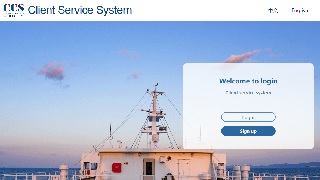
CCS has developed the EEMS system as
a tool to assist the clients for data monitoring, evaluation and reporting,
which will improve the quality of data and the efficiency of administration.
4)Training and consultation
With the challenges of compliance
and business, CCS designs the universal expert training to provide the
knowledge of requirements of regulation, best practice of minimizing operational
risks, and improvement of efficiency and cost effectiveness for all clients. Face-to-face
and online learning options are available.
The process of services provided by
CCS:
1.Assessment of monitoring
plan/SEEMP.
a)The application for assessment of
monitoring plan/SEEMP and required documents shall be submitted to the CCS
branch office in where the company is located via e-mail.
b)The CCS branch office will
response for the application in one workday and inform the client the relevant
information and preliminary arrangement if the application is accepted.
c)The assessment will be normally
completed in 15~30 days from the date of the application accepted. During the
assessment, the additional documents and on-site visit (ship and/or company)
may be required.
d)The Non-conformities raised during
the assessment shall be corrected and the revised monitoring plan shall be
re-submitted for approval.
e)The Confirmation of Compliance and
the assessment report could be issued in one month if there is not any
uncorrected non-conformity in the monitoring plan.
2.Verification of Emission
Report/Report at Company Level/FuelEU Report.
a)The application for verification
and required documents shall be submitted to the CCS branch office in where the
company is located via e-mail.
b)The CCS branch office will
response for the application in one workday and inform the client the relevant
information and preliminary arrangement if the application is accepted.
c)The verification plan will be sent
to the applicant in time for verification preparation and the schedule may be
modified according to the actual condition.
d)The verification will be normally
completed in 15~30 days from the date of the application accepted. During the
verification, the additional documents and on-site visit (ship and/or company)
may be required.
e)The non-conformities and/or
misstatements raised during the verification shall be corrected. In case of the
company does not correct the non-conformities and/or misstatements, the company
shall explain the main causes of the misstatements or non-conformities.
f)The Document of Compliance and the
verification report could be issued in one month if the emissions report is
verified free from any material misstatement.
g)For EU MRV/ETS/FuelEU, the company
shall submit the verified emissions report, report at company level and FuelEU
report to the EU Thetis-MRV System. After the confirmation of CCS, the company
shall submit the report to EU Commission.Impartiality and Independence StatementTo ensure the impartiality and independence related to verification activities carried out by CCS comply with the requirements of regulation and standard, the below MRV application is to be rejected by CCS:1. The confirmation or verification application from the applicant that CCS has provided the technical services to, and2. CCS has the relationship with those who provided technical services to the responsible party that support the poses an unacceptable risk to impartiality.To ensure the impartiality and independence of MRV verification relevant staff, CCS ensures:1. shall not use the personnel with actual or potential conflict of interest to carry out MRV verification activities;2. the personnel who carried out assessment of monitoring plan, shall not verify the emission report for the same vessel;3. shall not use the personnel who provide the technical service to the company to carry out the verification activities;All the verification activities carried out by CCS is to be done independently.In order to assist company to understand the convention, regulation and related guidelines, CCS will carry out training about those public information, but that does not mean that the verification for the companies participating in the training will be more easier, faster and cheaper.
Complaints and appeals:
1.The client may file a complaint
against the services provided by CCS to local branch office in where the
company is located or the Headquarters of CCS by email.
Branch office: refer to CCS website:
http://www.ccs.org.cn Headquarters:
sq@ccs.org.cn
2.Upon the investigation, an
official decision on handling of complaint will be delivered to client within
30~90 workdays.
3.The client may submit an appeal in
writing together with documentations to the CCS headquarters if he/she
disagrees with the service results or dissatisfied with the decisions on
handling of complaint by this Society.
4.An investigation team consist of
five members of impartiality committee agreed by appellant will investigate the
appeal and an official decision will be delivered to the appellant within 90
workdays.Relevant documents and software1. Application for Assessment of Monitoring Plan or Verification of Emission Report2. CCS EEMS System3. The Notice of IMO DCS and EU MRV verification4. CCS SEEMP Part II TemplateFor more details, please contact us:Contact: Chen jiejunTel.: 0086-021-38103406
E-mail: jjchen@ccs.org.cn