An exclusive interview with Mr. Qian Genfeng, Deputy General Manager of Ningbo Ocean Shipping Co., Ltd. (NBOS)
Ning
Yuan Dian Kun, the 740 TEU open-top pure-electric container ship invested in by
Ningbo Ocean Shipping Co., Ltd. (NBOS), departed from Ningbo-Zhoushan Port for
Jiaxing Port, both located in East China’s Zhejiang province, on April 15th,
2026, officially launching commercial operations. As China’s first 10,000-ton
pure-electric intelligent container ship, also the world’s largest of its kind,
its maiden voyage marks a new era of pure electric propulsion and intelligent
navigation for China’s coastal container shipping. Ning Yuan Dian Kun is the
first ship of NBOS’s initial batch of two pure-electric newbuildings, and it
will be joined by its sister ship Ning Yuan Dian Peng, soon to be delivered, to
form a pair for scaled, regular operations on their designated route.
From
design development and rules research to construction survey, the project
brought together the strengths of multiple partners, including NBOS, Jiangxi
Jiangxin Shipbuilding Co., Ltd., Shanghai Merchant Ship Design and Research
Institute, and China Classification Society (CCS), achieving collaborative
breakthroughs in key areas such as battery power system integration, autonomous
navigation system development, and the application of rules for intelligent
ships.
Closely
following the maiden voyage of Ning Yuan Dian Kun was the grand opening of the
10th Maritime Silk Road Port Cooperation Forum. Co-organized by NBOS, a special
forum on Shipping and Vessels was held at Ningbo International Conference
Center on May 27. The ship’s entry into service served as the centerpiece of
the forum, offering a live case study on how electric vessels and intelligent
technologies can inject fresh momentum into the green and diversified
development of global shipping and enhance supply chain resilience, bearing
strong practical significance and forward-looking insights.
In
a recent exclusive interview with China Ship Survey, Mr. Qian Genfeng, Deputy
General Manager of NBOS, shared his insights on what the success of Ning Yuan
Dian Kun means and what value it holds for the future. He offered an in-depth
analysis of the company’s green fleet development guided by “piloting first and
advancing in phases”, described feeder vessels as a “key enabler” and “testbed”
within the green shipping value chain, and shared his outlook on building a
diversified fleet powered by multiple green energy sources.

Mr.
Qian Genfeng, Deputy General Manager of Ningbo Ocean Shipping Co., Ltd. (NBOS)
Addressing
the prevailing digital transition across the industry, Qian laid out some conundrums
commonly faced by domestic trade shipping enterprises, notably data silos. He
also detailed NBOS’s practical experience in developing intelligent ships and
digital fleets guided by the principle of “practical, user-friendly and
effective” aligned with operational requirements.
When
discussing the future competitive landscape of the sector, Qian clearly stated
that fleet capacity will no longer be the sole yardstick for competitiveness.
Instead, green and low-carbon performance, digital operation, and integrated
supply chain service will together form the new core competitive edge for
shipping companies.
Reflecting
on the long-standing partnership between NBOS and CCS, Qian reviewed key
collaborative achievements in R&D of green and intelligent ship types,
rules application, and digital management. He also highlighted optimistic
expectations for deeper cooperation on cutting-edge fronts including autonomous
navigation, ship-shore coordination, green and low-carbon evaluation, and
research on international maritime rules.
Q:As a leading player in China’s domestic
container shipping, NBOS’s green and energy-efficient vessels account for
nearly 60% of its self-owned fleet. Could you please share your concrete plans
on bringing a sizable new energy fleet into practice? How do you view the role
of feeder vessels within the green shipping value chain?
A:In recent years, NBOS has consistently made
green and intelligent development a key priority for its fleet. At present,
green and energy-efficient vessels account for nearly 60% of our self-owned
fleet, marking the initial formation of a sizable green fleet.
For
our new energy vessel rollout, we are committed to “piloting first and
advancing in phases”. Exemplified by the Ning Yuan Dian Kun and Ning Yuan Dian
Peng, we focus on exploring commercial models for pure electric propulsion on
short-to-medium haul, high-frequency coastal routes. Meanwhile, we continue to
advance the construction of green and intelligent vessels, covering
methanol-ready capability and intelligent systems integration, so as to
gradually build a diversified green energy fleet structure.
We
hold the view that feeder vessels constitute a key enabler for the green
transition of the shipping industry. Feeder routes feature fixed voyages,
regular schedules, and relatively mature port charging infrastructure. All of
these provide ideal conditions for the early operation of new energy
technologies. Moving forward, feeder shipping will serve not only as an
important testbed for green and low-carbon technologies, but also as a key
component of regional green logistics networks.
Q:From your perspective, what aspects will define
the core competitiveness of shipping companies in the future?
A:In my opinion, competition among shipping
enterprises will gradually shift from scale-based competition to competition of
comprehensive strengths. While the capacity scale remains relevant, the more
decisive factor lies in whether a carrier maintains an advanced fleet structure
and green and low-carbon capabilities. As international emission reduction
regulations grow increasingly stringent, green transition has evolved from
being a “bonus” to a “must”.
Digital
operation capabilities will also gain mounting significance. Going forward,
merely “owning vessels” will no longer suffice; companies have to master fleet
management expertise, achieving safer, more efficient and lower-carbon
operations through intelligent ships, digital fleet management and ship-shore
coordination.
Furthermore,
customer demands are evolving. Shipping companies will compete on far more than
basic transport capacity; their integrated supply chain service will become a
key differentiator. This encompasses schedule reliability, full-process
visibility, and green transport solutions.
All
told, green and low-carbon performance, digital operation and integrated supply
chain service will jointly constitute the pivotal competitive edge for shipping
companies of tomorrow.

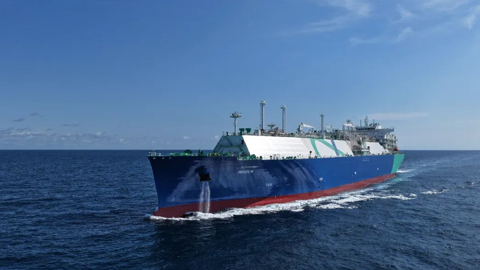
Ning Yuan Dian Kun,
China’s first and the world’s largest 10,000-ton pure-electric intelligent
container ship
[Photo/ NBOS]
Q:Digital transition has become a major trend
across the shipping sector. In your view, what are the biggest challenges
domestic trade shipping companies face in digital transition? What experience
can NBOS offer the industry through its practices in intelligent ships and
digital fleet management?
A:I think the biggest challenge for domestic
trade shipping companies in digital transition lies in inadequate data
interconnectivity, coupled with poor alignment between certain digital
platforms and real operational scenarios. Shipping encompasses multiple links
including vessels, ports, dispatch operations and equipment. Inconsistent data
standards can easily give rise to “data silos”. In addition, some digital
systems suffer from the issue of “prioritizing development over practical
application”, leaving considerable room for improvement in their actual
operational performance.
NBOS
has pressed ahead with the development of intelligent ships and digital fleet
management over recent years. Taking Ning Yuan Dian Kun as an example, the
vessel is equipped with an integrated intelligent platform, intelligent
navigation system, intelligent machinery system and intelligent video
management system, enabling real-time collection of operational data, unified
management as well as ship-shore coordination.
Our
key takeaway is that digital transition must be rooted in tangible operational
demands and guided by the principle of being “practical, user-friendly and
effective”, genuinely serving the goal of enhancing safety and efficiency.
Q:We know that Ning Yuan Dian Kun has obtained
survey and certification by CCS. Taking this project as an example, what other
representative cooperation achievements have NBOS and CCS delivered in recent
years? How would you assess the technical support and professional services
provided by CCS throughout this process?
A:In recent years, NBOS and CCS have forged
in-depth cooperation centering on areas such as green and low-carbon
performance and intelligent shipping. Our collaboration has gradually expanded
beyond conventional ship survey to emerging technology scenarios including new
energy, intelligence and digitalization.
Beyond
the Ning Yuan Dian Kun project, we have maintained strong collaboration in the
research and development of green and intelligent ships, the application of
rules for intelligent ships, and digital vessel management. Particularly amid
the rapid rollout of new technologies across the industry, CCS has not only
delivered professional survey services, but also offered tremendous support in
rules research, technical verification and industry standards development,
providing an important safeguard for us to explore and deploy green and
intelligent ship technologies.
We
believe that CCS acts as both a key developer of industry rules and a vital
technical force driving the development of China’s green and intelligent
shipping. I hope both sides will further deepen future partnership and jointly
accelerate the wider application of green and intelligent ship technologies.
Q:In what areas can NBOS and CCS further deepen
their cooperation on green and intelligent ships in the future?
A:As the world’s largest and the nation’s first
10,000-ton intelligent container ship powered entirely by electricity, Ning
Yuan Dian Kun received robust support from CCS throughout all phases, ranging
from design and construction to autonomous navigation testing. Specifically,
CCS delivered extensive professional technical support for the containerized
battery system, intelligent navigation system, and autonomous navigation
testing, among others.
Looking
ahead, we hope to deepen cooperation focusing on green energy-powered ships,
intelligent ships and autonomous navigation, jointly advancing rules research,
full-scale ship validation and operational data accumulation for new energy
ship types.
Meanwhile,
we look forward to strengthened collaboration in ship-shore coordination,
digital vessel management, green and low-carbon assessment and research on
international rules, jointly facilitating the high-quality development of the
green and intelligent shipping industry, and contributing China’s experience to
the industry’s low-carbon transition.
Note: If you need to reprint, please indicate the source of the information.