With the escalation of international shipping emission reduction requirements, Onboard Carbon Capture Systems (OCCS) have emerged as innovative equipment enabling deep decarbonization for traditional fuel-powered vessels.
By Niu Song, CCS Shanghai Rules & Research Institute
With the escalation of international shipping emission reduction requirements, Onboard Carbon Capture Systems (OCCS) have emerged as innovative equipment enabling deep decarbonization for traditional fuel-powered vessels. They continue to attract significant industry attention, with multiple pilot projects already installed on actual ships. OCCS achieves shipboard CO2 emission reduction by installing a capture system to separate CO2 from exhaust gas, liquefy and store it, and offload it for sequestration either while the ship is berthed or via ship-to-ship transfer. However, the installation, operation, maintenance, and integrated application of OCCS face multiple risk challenges. These risks include technical issues such as system compatibility and equipment reliability, safety hazards like high-pressure storage, fire and explosion, cryogenic frostbite, and toxic substance leakage, as well as operational concerns regarding energy efficiency loss and high maintenance costs. According to IMO statistics, maritime accidents caused by equipment failures account for over 30% of the total. As an emerging technology, the risk characteristics of OCCS are not yet fully understood, necessitating systematic risk assessment services from professional institutions.

As a world-leading class society, China Classification Society (CCS) is committed to the mission of "Ensuring Maritime Safety and Promoting Green Decarbonization." With years of expertise in marine low-carbon technologies, CCS has established a comprehensive risk assessment technical system. In response to industry needs for OCCS, leveraging its profound technical accumulation and innovative practices in maritime safety assessment and green technology certification, CCS has constructed a full-chain, lifecycle risk assessment technical service system covering OCCS equipment R&D, ship type design, application/retrofitting, and onboard liquid CO2 unloading, providing critical technical support for the green and low-carbon transformation of the shipping industry and the high-quality development of the shipbuilding industry.
I. Construction of the Technical System for Risk Assessment of OCCS-Equipped Ship Types
1. Rules, Guidelines, and Standards
The rules, guidelines, and standards system serves as the core support for OCCS risk assessment. CCS strictly adheres to international conventions, rules, and industry standards while independently innovating guidelines based on international regulations and domestic practices. CCS took the lead in formulating the Guidelines for Onboard Carbon Capture Systems, which specify full-process technical requirements for OCCS design, installation, operation, and survey. Targeting the characteristics of organic amine-based decarbonizers, the Guidelines refine assessment criteria for key risks such as flammable/toxic gas prevention, chemical leakage protection, and the safety of high/low temperature and high-pressure equipment.
The Guidelines innovatively establish an OCCS class notations system, implementing differentiated risk management for pre-installed and installed equipment through tiered certifications: OCCS Ready 1, OCCS Ready 2, and OCCS Ready 2 (X). This provides flexibility for ship type design with future OCCS installation in mind. Furthermore, to ensure the safe unloading of captured CO2, CCS, integrating Goal-Based Standards (GBS) concepts with risk assessment methodologies, organized the compilation of the Guidelines for Onboard Liquid CO2 Loading and Unloading Operations. These guidelines cover full-scenario operation modes including ship-to-ship, ship-to-shore, ship-to-tanker truck, and ship-to-barge, providing clear operational guidance for personnel, improving operational efficiency, ensuring smooth processes, and further facilitating the improvement of the downstream industrial chain for onboard carbon capture technology, thereby enhancing CCS's classification service capabilities in the OCCS field.
2. Risk Assessment Framework
Based on core principles of maritime safety assessment and combined with OCCS working principles and technical characteristics, CCS has constructed a "Lifecycle & Multi-dimensional" risk assessment framework. This covers four stages—design, construction, operation, and maintenance—and comprehensively identifies interaction risks between OCCS and the ship's original systems:
① Design Stage: Focuses on assessing the impact of OCCS on general arrangement, structural strength, ship stability, power systems, and compatibility risks with integrated systems.
② Construction Stage: Focuses on construction risks such as equipment installation precision, pipeline connection reliability, and system commissioning safety.
③ Operation Stage: Focuses on operational risks including CO2 capture efficiency stability, temperature/pressure control of CO2 storage tanks, and waste heat utilization efficiency.
④ Maintenance Stage: Regularly assesses maintenance risks brought about by equipment aging, component replacement, and system upgrades.
Additionally, from a risk dimension perspective, CCS categorizes OCCS ship type risks into four major classes: Technical Risk, Safety Risk, Environmental Risk, and Economic Risk. Technical risks include system failures and energy efficiency degradation; safety risks cover fire/explosion and toxic substance/CO2 leakage; environmental risks involve pollution; and economic risks include equipment return on investment and maintenance cost overruns. This achieves full coverage of risks in actual OCCS applications. Furthermore, CCS deeply aligns risk assessment requirements with international conventions related to ship energy efficiency, forming a risk assessment standard framework compatible with the Goal-Based Structural Standards system to ensure the authority and international mutual recognition of assessment results.
3. Core Assessment Methods
Accurate and efficient assessment methodologies are core capabilities for risk management. CCS integrates mature maritime safety assessment technologies to build a multi-dimensional risk assessment technical matrix, innovatively applying it to OCCS ship type assessment to form a scientific system combining qualitative and quantitative methods. Targeting OCCS characteristics, the focus is on eight core risk areas:
① OCCS Adaptability to the Marine Environment;
② Operational Interference with Combustion Devices;
③ Accumulation of Toxic and Hazardous Gases;
④ Chemical Substance Leakage;
⑤ Hazards under Extreme Operating Conditions;
⑥ Fire/Explosion Hazards;
⑦ CO? Asphyxiation Risk;
⑧ Cryogenic Frostbite Risk.
Qualitative risk assessment primarily utilizes methods such as Hazard Identification (HAZID), Hazard and Operability Analysis (HAZOP), and/or Failure Mode and Effects Analysis (FMEA), organizing cross-disciplinary expert teams to identify potential risk points. Quantitative risk assessment typically employs models such as the Analytic Hierarchy Process (AHP), Fuzzy Comprehensive Evaluation, and Probabilistic Risk Assessment (PRA) to quantify risk levels. Additionally, Digital Twin technology is introduced to establish simulation models for OCCS-equipped ships, simulating vessel responses under scenarios like extreme sea conditions and system failures to predict risk probabilities and consequence severity, enabling pre-warning and assessment adjustment.
II. Technical Service Capabilities for Risk Assessment of OCCS-Equipped Ship Types
1. Ship Type Design Optimization
The integration and compatibility of OCCS with the ship's original general arrangement, power system, electrical installations, and structural stability are the core of ship type design optimization. Leveraging its extensive experience in ship type R&D and assessment, CCS possesses comprehensive system integration risk assessment capabilities:
General Arrangement: Assessing the impact of installation locations of OCCS equipment (absorption/desorption units, compression/liquefaction units, CO2 storage tanks, etc.) on bridge visibility and ship stability. Furthermore, overall and local structural strength is evaluated through rule calculations and Finite Element Analysis (FEA) to further optimize the OCCS layout.
Power System Matching: Analyzing the impact of energy consumption required for OCCS operation on ship endurance and energy efficiency indicators. Considering energy-saving measures such as waste heat utilization, optimization recommendations for relevant power system parameters are provided.
Electrical Equipment Compatibility: Assessing the impact of power loads required for OCCS operation on the ship's power grid and formulating risk control plans for electrical system capacity expansion and harmonic suppression.
In the project of 82,000 DWT bulk carrier newbuilding equipped with OCCS, CCS collaborated with design institutes to conduct research on general ship design and power load assessment. This successfully resolved integration compatibility issues between OCCS, exhaust gas cleaning systems (scrubbers), and electric hatch covers, providing critical technical support for ship type design optimization.
2. Safety Risk Assessment
OCCS involves combustion device matching, chemical substance handling, and high-pressure/low-temperature storage, presenting prominent safety risks. Based on this, CCS has constructed a full-chain safety risk prevention and control assessment system, focusing on the following key areas:
Pressure Storage Safety Assessment: Adopting model-based risk assessment methods to simulate the structural integrity of CO2 storage tanks under accident scenarios such as collision and grounding, and formulating configuration standards for safety facilities like pressure relief valves and emergency discharge devices.
Fire and Explosion Risk Assessment: Analyzing the explosion limits of CO2 leakage mixed with air, combining with the layout of the ship's fire-fighting system to evaluate the effectiveness of fire detection and extinguishing devices, and optimizing fire-fighting design schemes.
Operational Safety Assessment: Developing standardized operating procedures (SOPs) for human risks such as crew operational errors and improper emergency response, and evaluating crew training needs and emergency drill effectiveness.
CCS identifies hazardous scenarios through qualitative analysis and determines risk levels through quantitative calculation to ensure the scientific nature and reliability of safety risk assessment results. This was applied in the project of 57,000 DWT bulk carrier retrofitted with OCCS. CCS identified 30 risk points, including pipeline leakage, abnormal decarbonizer supply, heat exchanger failure, and ventilation failure between compression/liquefaction units, and developed 23 recommended measures. This provides solid technical support for CCS's classification survey and technical services related to green emission reduction.
3. Energy Efficiency and Environmental Risk Assessment
The core value of OCCS-equipped ship types lies in CO2 emission reduction, but system operation may lead to ship energy efficiency loss and environmental risks such as CO2 leakage. Based on this, CCS has constructed dual technical service capabilities for "Energy Efficiency Assessment & Environmental Risk Prevention." Energy Efficiency Assessment: Establishing energy efficiency calculation models for OCCS-equipped ship types, and combining the comprehensive utilization of resources such as onboard waste heat to quantitatively analyze the impact of OCCS on energy efficiency indicators like fuel consumption, CII, and GFI. Environmental Risk Assessment: Simulating the impact of CO2 leakage on the marine ecosystem and formulating prevention and control plans for leakage monitoring and emergency response to ensure compliance with international pollution prevention regulations.
III. Practical Cases
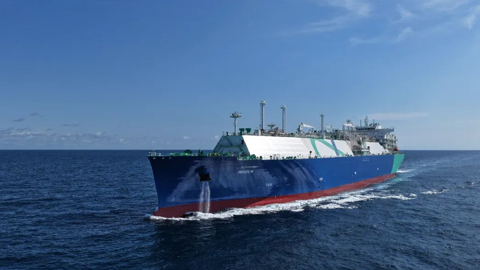
Full-process practical application demonstrates the effectiveness of technical services. By the end of 2025, CCS has successfully completed risk assessment and approval services for multiple OCCS-equipped ship types, including LNG Carriers, Very Large Crude Carriers (VLCC), Very Large Gas Carriers (VLGC), Kamsarmax bulk carriers, Pure Car and Truck Carriers (PCTC), and large container ships.
Taking the "Shandong Xinsheng" owned by Shandong Shipping as an example, designed by SDARI and equipped with OCCS provided by No. 711 Research Institute, built by Jiangsu Hantong Ship Heavy Industry. CCS undertook full-process technical support and risk assessment services for the project. Through comprehensive assessment of general ship design, carbon capture system integration, and waste heat utilization, CCS assisted the smooth advancement of the construction plan for a series of 12 ships. Design Stage: Assessed the impact of OCCS on ship stability and structural strength, optimizing storage tank layout. Construction Stage: Formulated equipment installation inspection standards and conducted pipeline tightness tests to prevent construction risks. Operation Stage: Established a dynamic risk monitoring model to assess carbon capture efficiency and energy efficiency loss, proposing recommendations for optimized operating parameters.
Through CCS's risk assessment services, this ship type successfully met EEDI and NOx emission design requirements. The carbon capture system achieves food-grade purity CO2 recovery, which can be reused as a chemical raw material after ship berthing, realizing the unity of environmental and economic benefits.
Furthermore, in the OCCS retrofitting project for the 'Yuedian 56' (adopting centrifugal technology)," CCS formed a special survey team to track and solve technical challenges such as structural interference and electrical integration throughout the process. Based on the "Guidelines for Onboard Liquid CO? Loading and Unloading Operations," CCS completed full-process risk verification for unloading and transfer, ensuring the safe commissioning of this innovative system with a decarbonization efficiency exceeding 90%. For high-end ship types such as the 175,000 m3 low-emission LNG carrier with OCCS, CCS optimized the adaptation design with carbon capture devices through multi-energy synergy analysis, assisting the ship type in obtaining Approval in Principle (AIP) and achieving ultra-low emission targets, facilitating the safe implementation of more innovative OCCS-equipped ship types.
In the future, CCS will continue to uphold the philosophy of "Proactively Creating Value", continuously deepen technological innovation, improve the standard system, strengthen industrial chain collaboration, and provide high-quality risk assessment technical services for the large-scale application of OCCS-equipped ship types.
Note: If you need to reprint, please indicate the source of the information.