At its 81st session in 2024, the Marine Environment Protection Committee (MEPC) of the International Maritime Organization (IMO) formally proposed the draft "IMO Net-zero Framework," which was approved at MEPC 83 in April 2025.
By Jian Yanjun, CCS Shanghai Rules & Research Institute
At its 81st session in 2024, the Marine Environment Protection Committee (MEPC) of the International Maritime Organization (IMO) formally proposed the draft "IMO Net-zero Framework," which was approved at MEPC 83 in April 2025. As a comprehensive medium-term measure for ship GHG reduction, it represents the world’s first international industry regulation integrating mandatory fuel GHG intensity standards and a GHG pricing mechanism. Though MEPC/ES.2 in October 2025 decided to suspend its adoption for one year, the meeting still approved a 14-point workplan under MARPOL Annex VI for implementation, covering GFI calculation guidelines, ZNZs-related guidelines, refinement of LCA and SFCS guidelines, the Net-zero Fund, OCCS-related guidelines, and coordination with short-term measures. As a key tool to achieve the reduction targets set by the "2023 IMO Strategy on Reduction of GHG Emissions from Ships," the framework has gained recognition from most countries and organizations. Despite opposition from individual countries, especially oil-producing nations, leading to the one-year delay, its core content aligns with IMO’s emission reduction goals, and adoption is only a matter of time given the global decarbonization trend.

The core of the IMO Net-zero Framework lies in a set of mandatory, target-oriented Well-to-Wake (WtW) GHG Fuel Intensity (GFI) standards for marine fuels, along with a GHG pricing and flexible compliance mechanism. Under this framework, ships are assigned two tiers of annual GFI targets: a base target and a direct compliance target, both decreasing year by year. A ship's attained annual GFI is calculated as the ratio of its total annual GHG emissions (gCO2 eq) to its total annual energy consumption (MJ).
Compliance is determined by comparing the ship's attained annual GFI against the two-tier targets, with the resulting compliance balance (surplus or deficit) governed by the following rules:
1. Ships meeting or outperforming the direct compliance GFI target earn Surplus Units (SUs). SUs are transferable to other vessels, bankable for up to two calendar years post-issuance, or may be voluntarily retired.
2. Ships meeting the base target but failing direct compliance incur Tier 1 Deficit (DEF_T1). DEF_T1 must be offset solely via Tier 1 Remedial Units (RUS-T1) purchased from the IMO Net-zero Fund at 100 USD/tCO2eq (current price).
3. Ships missing the base target face both DEF_T1 and Tier 2 Deficit (DEF_T2). DEF_T1 is resolved via RUs-T1 (same terms above). DEF_T2 can be balanced using transferred SUs, historical banked SUs, or Tier 2 Remedial Units purchased from the IMO Net-zero Fund at 380 USD/tCO2eq (current price).
4. Vessels using Zero/Near-Zero fuels (ZNZs) and meeting direct compliance qualify for additional financial incentives (details pending). ZNZs have a GFI threshold of 19 gCO2 eq/MJ (pre-2035) and 14 gCO2eq/MJ (post-2035).
These rules enable calculation of emission deficit penalties for fossil fuel use. Post-implementation, non-abated fossil fuel operations will face escalating annual costs.
For vessels using fossil fuels, Onboard Carbon Capture Systems (OCCS) become the sole viable compliance technology. Cost projections indicate OCCS will achieve strong economic viability within three years of the Framework launch, with improving returns annually. Excess annual capture beyond direct compliance requirements generates tradable SUs which can be used to meet Tier 2 compliance for other vessels within the fleet or gain additional revenue through third-party sales, thus significantly lowering the operating cost of OOCS.

The framework’s GHG reduction incentives and penalties create market certainty for cost-benefit analysis, stimulating sustainable fuel supply chains while driving OCCS deployment and supporting industries. This offers an economically feasible pathway for vessels using traditional fossil fuels, particularly LNG carriers, to achieve compliance.

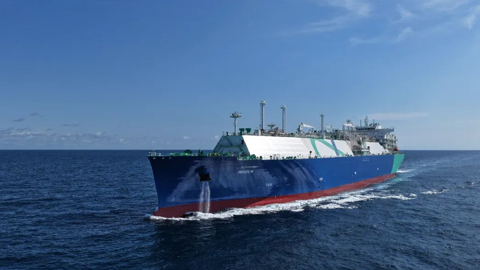
China Classification Society (CCS), based on the requirements of the Net-Zero Framework, has partnered with designers and OCCS manufacturers to develop new LNG carrier vessel types (178,000 m3 and 271,000 m3) integrated with OCCS. A 35% annual net capture rate design has received Approval in Principle (AIP) and economic validation. Research and analysis show that even accounting for CO? offloading and downstream processing costs (100 USD/ton), the investment is projected to be recovered within five years, ensuring these new vessel designs maintain CII rating A through 2040.
Note: If you need to reprint, please indicate the source of the information.